Free (Ishigami)

Junya-Ishigami-.-House-and-Restaurant-.-Japan-12.jpg


Een fantastische tentoonstelling in Fondation Cartier, van de Japanse architect
Junya Ishigami. Freeing Architecture heeft hij het genoemd en dat doet hij; wat een prikkelende, vrijmoedige denker. Weg van de conventies en verstikkende regelgeving in het bouwen.  Zijn uitspraken zijn even eenvoudig als waar (‘een architect brengt mensen bij elkaar’, ‘ik ben als een tour-guide, ik geef richting’) en zijn ontwerpen zijn humaan en extreem tegelijk.
Bovenstaande afbeelding is een ware tour de force; een restaurant en woonhuis voor een chef-kok in Japan, waar een ‘cave’, een wijnkelder het uitgangspunt was. Hij liet diepe kuilen graven in de stenige grond, die hij vervolgens vulde met (gewapend) beton, netjes vlak gestreken aan de bovenkant. De overblijvende grond eromheen werd weggegraven, en wat overbleef is weer een ‘positief’, met op uitgekiende plekken grote gaten voor de lichtinval. Allemaal gebaseerd op een oeroude ‘molding’ techniek uit de beeldhouwkunst, en -wie weet- geïnspireerd door de uit de rotsen gehouwen kerken in Lalibela, Ethiopië.

Een ander eeuwenoud principe is het herbouwen van een tempel vlakbij Kyoto (dat gaat terug naar de achtste eeuw). De oude tempel wordt elke twintig jaar afgebroken en exact weer opgebouwd met nieuw hout. Met die continuïteit in vernieuwen blijft de kennis bewaard en van generatie op generatie doorgegeven. Toen ik daar was werd het hout van de oude tempel -in kleine stukjes gehakt- weggegeven, als een gelukbrengend relikwie!

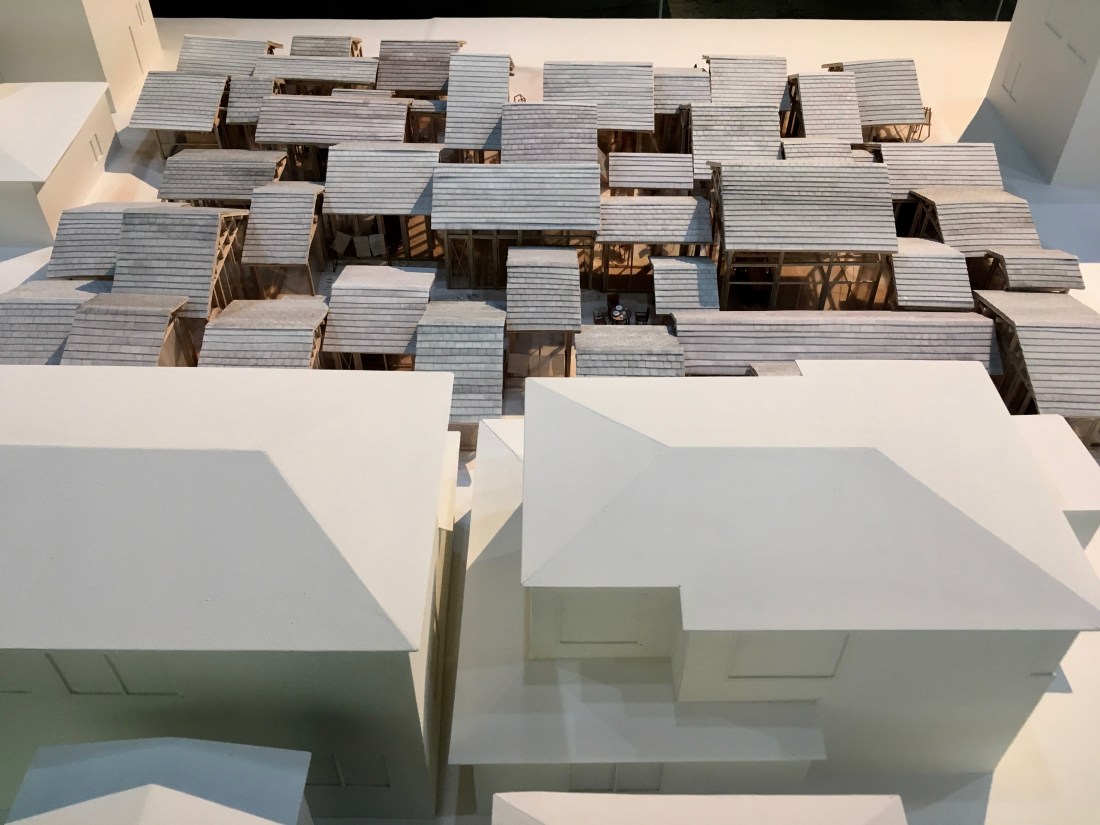
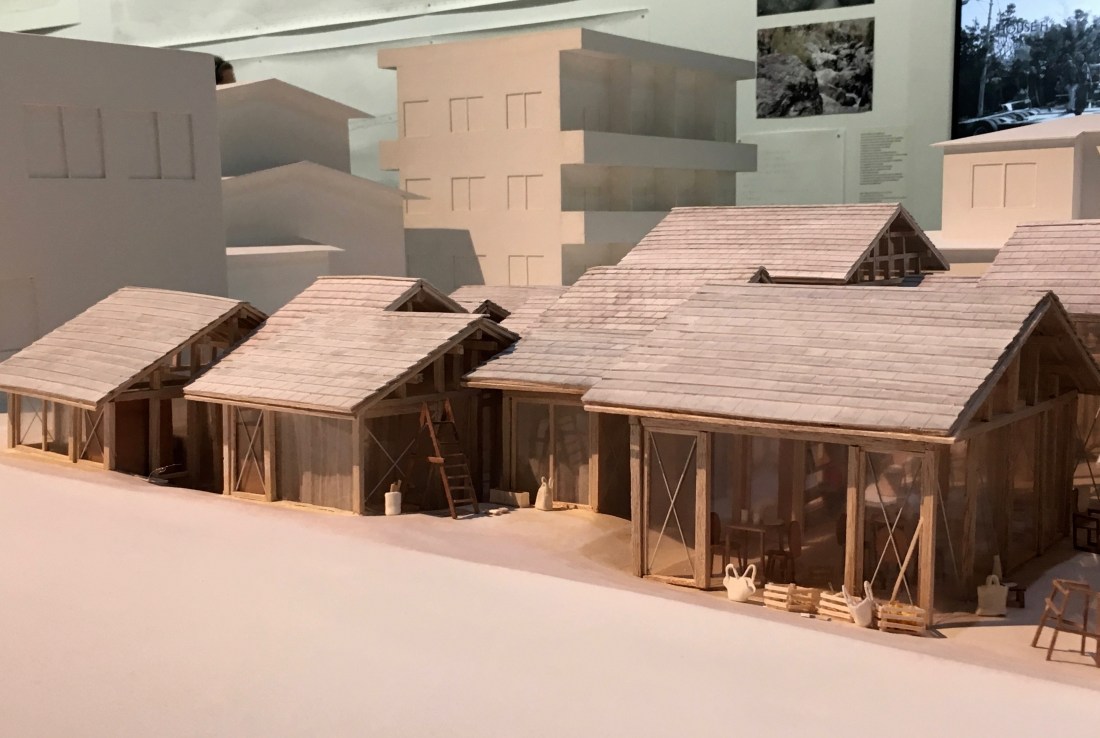
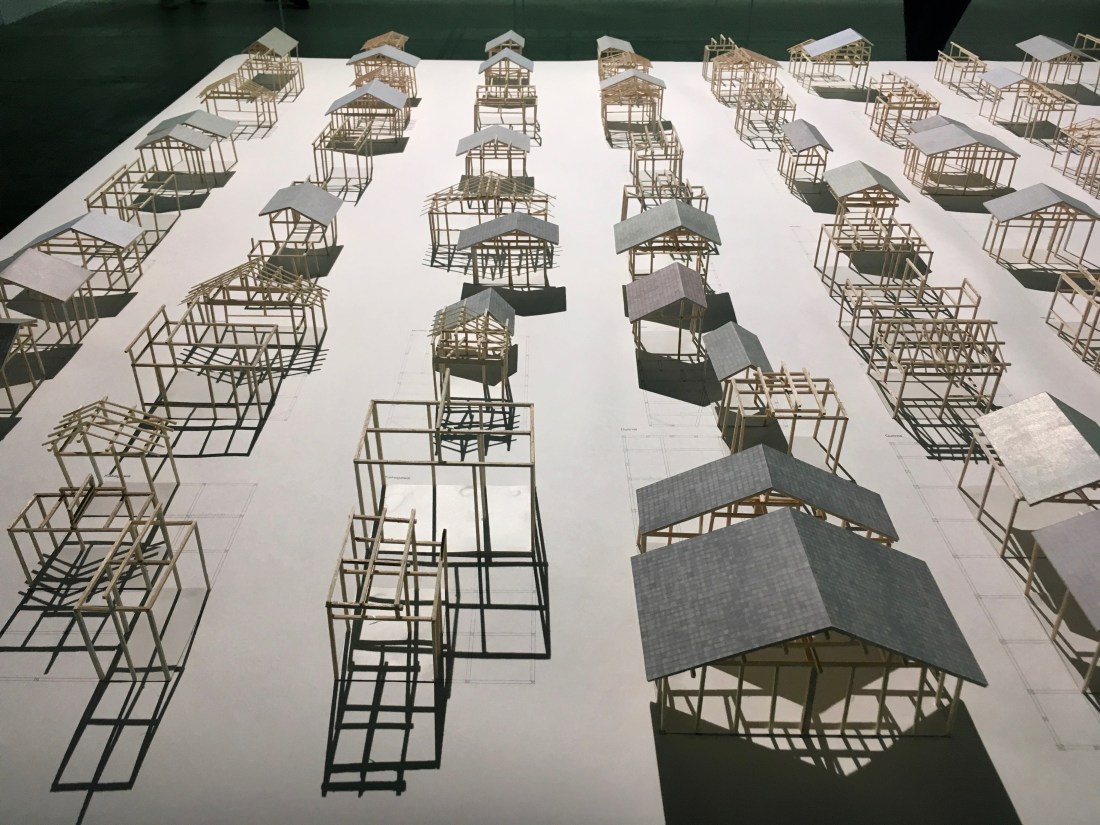
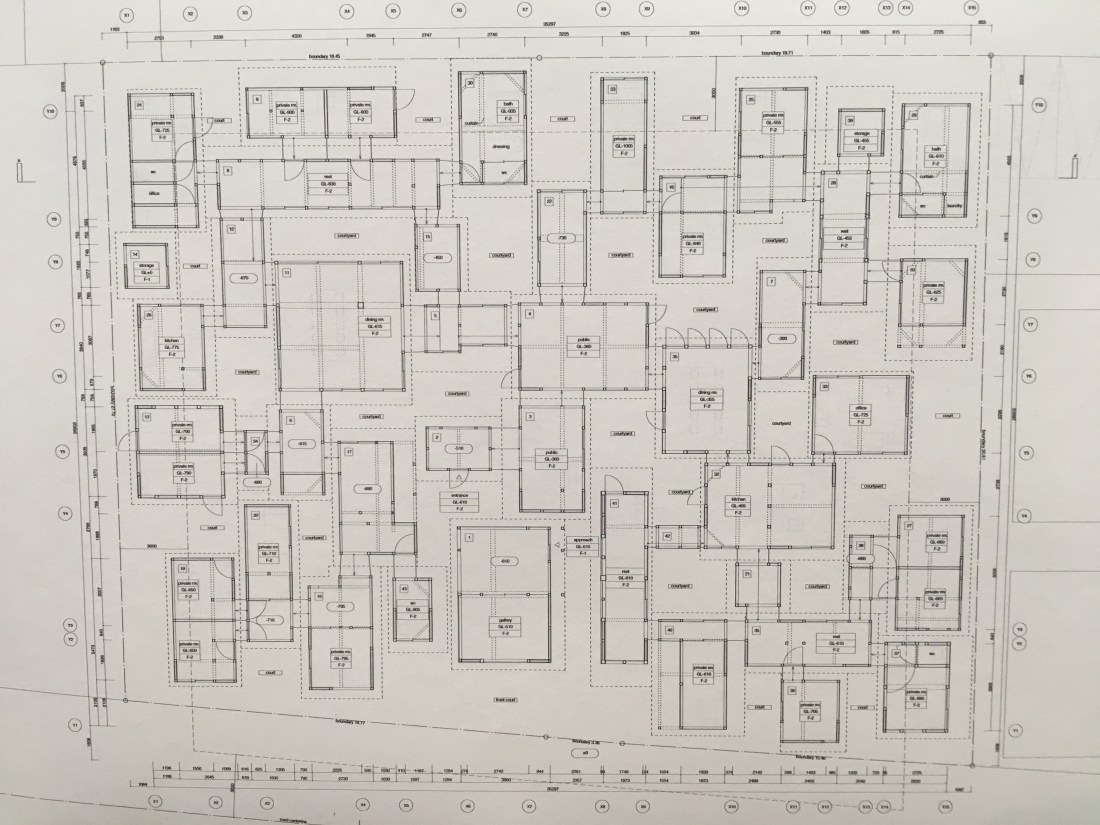
Die gedachte heeft mede geleid tot een oplossing van Ishigami, voor de opdracht een verzorgingshuis voor Alzheimer patiënten te bouwen. Home for the Elderly is samengesteld uit veertig huizen uit het hele land, die om allerlei redenen afgebroken moesten worden. Elk huis met specifieke kenmerken (door de geografische ligging -de tsunami-, houtconstructie, plaatselijke bouwtechnieken) werd gestript, getransporteerd en weer opgebouwd in een cluster, op een iets verdiept terrein. Privé- en publieke ruimte mooi afgewisseld, met binnenplaatsen, grote eetkamers, tuintjes, opslag en keukens. Alle woonruimte is gelijk van verhouding; allemaal gebaseerd op de afmeting van de traditionele tatami-mat (90 x 180 cm). Stel je voor op je oude dag wat scharrelen, planten water geven en eten met medebewoners in zo’n harmonieuze, huiselijke omgeving, die ongetwijfeld herinneringen op zal roepen aan de huizen waarin ze opgroeiden.


ishi 1


ishi5IMG_2309.jpg


ishi2


Zo werden er nog tientallen, zeer verschillende projecten getoond in aantrekkelijke modellen en maquettes, allemaal het belichten waard.
En waar kun je een werk van Ishigami zien? In Friesland! Niet ver van Leeuwarden, bouwde hij een hele elegante bezoekersruimte op het terrein van een oud kasteel, De Vijversburg.


A fantastic exhibition in Fondation Cartier, the Japanese architect Junya Ishigami. He has called it Freeing Architecture and that’s what he does; what a provocative and sensitive thinker. Away from the conventions and suffocating regulations in building. His statements are as simple as true (‘an architect brings people together’, ‘I am like a tour guide, I give direction’) and his designs are humane and extreme at the same time.
The above image is a true tour de force; a restaurant and residence for a chef in Japan, where a ‘cave’, a wine cellar was the starting point. He dug deep holes in the stony ground, which he then filled with (reinforced) concrete, neatly flattened at the top. The remaining soil around it was dug away, and what was left is another ‘positive’, with large holes for the light. All based on an ancient ‘molding’ technique.

Another age-old principle is the rebuilding of a temple near Kyoto (that goes back to the eighth century). The old temple is demolished every twenty years and rebuilt exactly with new wood. With this continuity in innovation, the knowledge is preserved and transmitted from generation to generation. When I was there, the wood from the old temple was given away in small pieces, like a relic!

That idea has led to a solution by Ishigami, for the assignment to build an old people’s home for Alzheimer patients. Home for the Elderly is composed of forty houses from all over the country, which had to be demolished for various reasons. Each house with specific characteristics (due to the geographical location, timber construction, local building techniques) was stripped, transported and rebuilt in a cluster, on a slightly deeper terrain. Private and public space nicely interspersed, with courtyards, large dining rooms, inner gardens, storage and kitchens. All living space is equal in proportion; all based on the size of the traditional tatami mat (90 x 180 cm). Imagine fiddling around on your old age, watering plants and eating with fellow residents in such a harmonious, homely environment that will undoubtedly recall the houses they grew up in.

There are dozens of other, very different projects in attractive models, all worth highlighting.
Where can you see a work by Ishigami? In Friesland! Not far from Leeuwarden, he built a very elegant visitor centre on the grounds of an old castle, De Vijversburg.


Lead planes


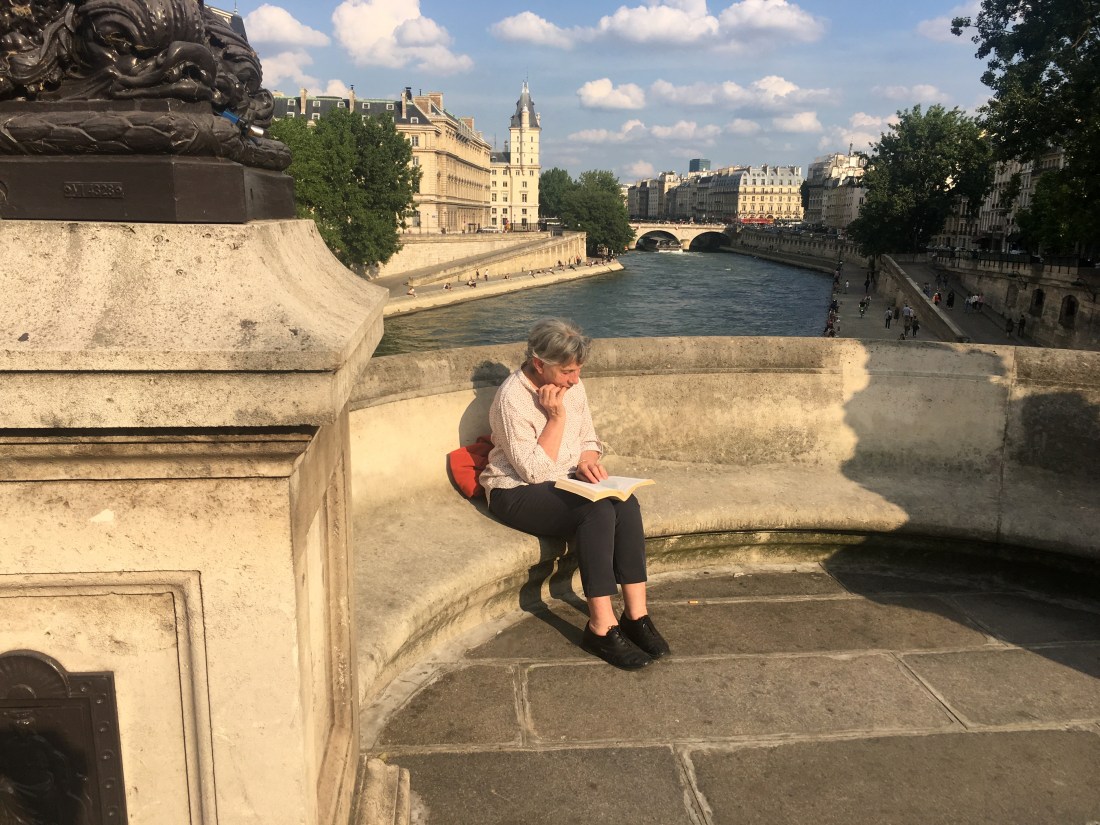
Dit is Shifeng, die ik tegenkwam op de tentoonstelling van Anselm Kiefer, waar hij een grote fan van is. Hij face-timede met zijn vriendin in China, zodat ze kon meegenieten van alles wat hij zag, waarbij hij zacht pratend in de telefoon commentaar gaf. Hij is zelf kunstenaar en een van de 631 docenten op Academy of Fine Arts in Xi’an, waar 6400 studenten les krijgen.

This is Shifeng,  who I met at the Anselm Kiefer exhibition, who he is a big fan of. He face-timed with his girlfriend in China so that she could enjoy all that he saw. He is himself an artist and one of the 631 teachers at Academy of Fine Arts in Xi’an, where 6400 students are taught. Shifeng teaches Chinese Painting and has one week of vacation. He spent a few days in Tuscany, where he painted the landscape on one of the small canvases that he had specially brought with him. One day he spent in Amsterdam, -where he was yesterday -and one day Paris, which he probably will spend in the gallery where I met him; Thaddaeus Ropac in a former factory building in a suburb of the city. This Kiefer exhibition was the main reason for his trip to Europe.


xi an toel.jpg

Een toelatingscommissielid op de academie in China.


Shifeng doceert Chinese Painting en heeft één week vakantie. Hij bracht een paar dagen door in Toscane, waar hij het landschap schilderde op een van de kleine doeken die hij daarvoor speciaal meegenomen had. Hij verbleef éen dag in Amsterdam, -daar was hij gisteren- en de dag in Parijs zal hij waarschijnlijk voor een groot deel doorbrengen in de galerie waar ik hem tegenkwam; Thaddaeus Ropac in een voormalig fabrieksgebouw in een buitenwijk van de stad.  Deze tentoonstelling van Kiefer was de voornaamste aanleiding voor zijn reis naar Europa.
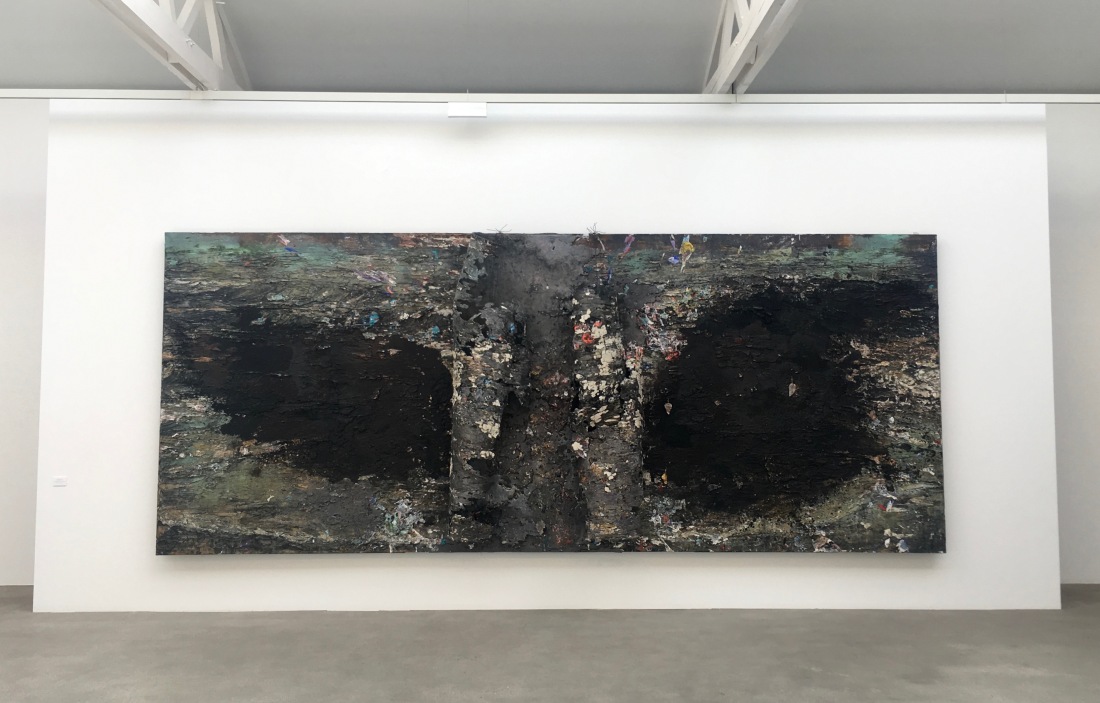
In de galerie (van een afmeting waarop menig museum jaloers zou zijn) hangen zo’n 20 van zijn laatste monumentale schilderijen en staan drie grote objecten. Allemaal werk van de laatste 3 jaar.

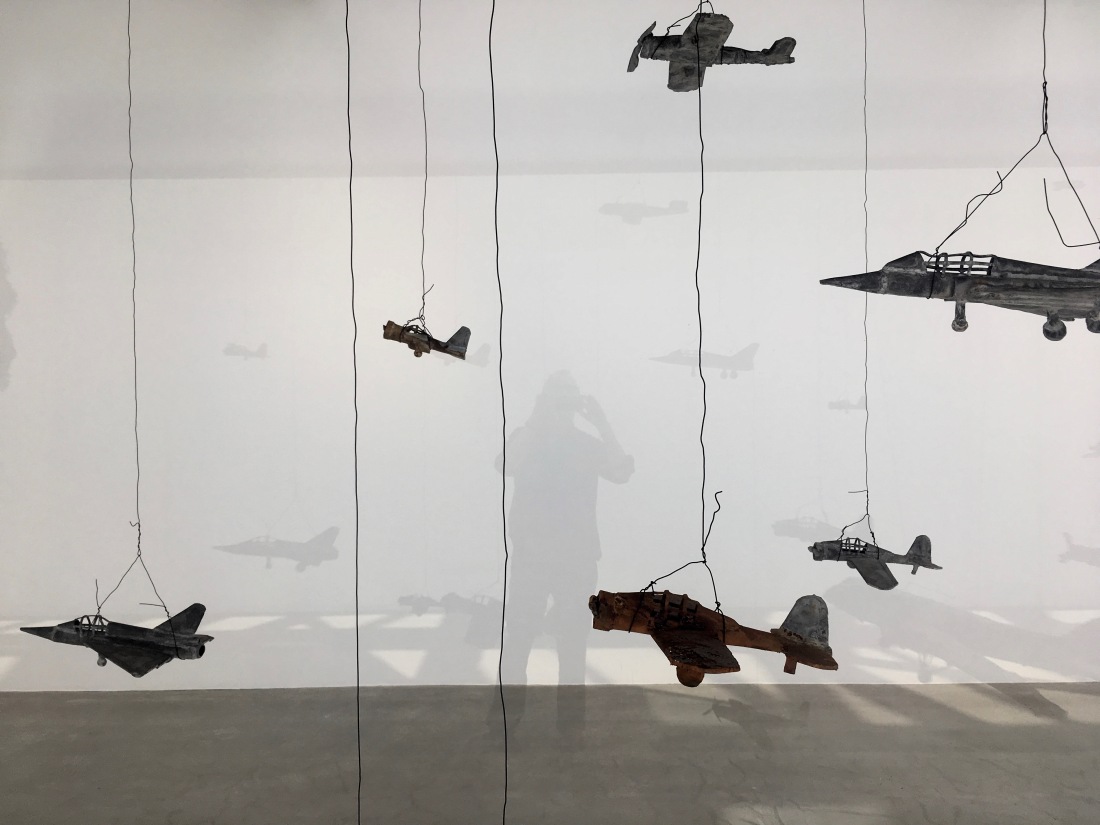
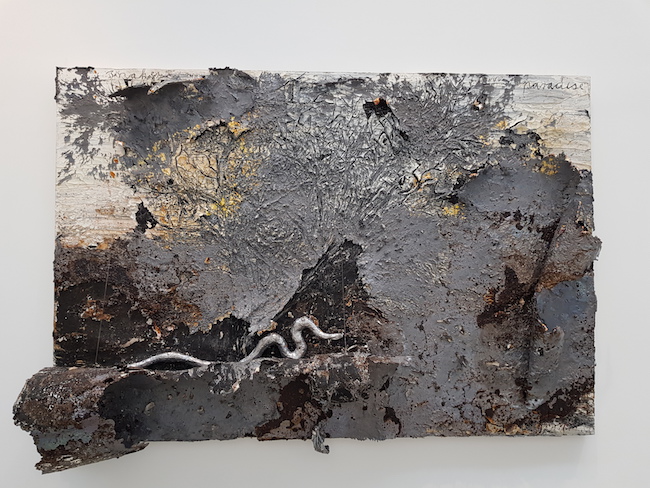
Für Andrea Emo staat er in zijn fijne handschrift, beetje onhandig met houtskool op de muur geschreven. Emo, een Italiaanse filosoof en overtuigd nihilist is ervan overtuigd dat je het verleden vernietigen moet om nieuw leven mogelijk te maken. Geschiedenis, collectief geheugen, herinneringen, macht, schuldbesef, allemaal grote zaken waarmee Kiefer zich zijn hele leven op obsessieve wijze heeft beziggehouden. Zware werken, in fysieke en overdrachtelijke zin. Dit keer heeft hij oudere schilderijen (vanaf 1985) waarover hij niet tevreden was getransformeerd met een zelf bedachte techniek van destructie en vernieuwing, om bij Emo te blijven. Als een alchemist goot Kiefer kokend lood over delen van de olieverf landschappen die hij eigenlijk had afgekeurd. Dikke plakken omhoog krullend lood deden de verf smelten en namen hele stukken doek en stro en hout mee omhoog. Het lijkt hier en daar op asfalt, alsof het wegdek is opengescheurd. Dat lood is bruut en elegant tegelijk, verwijzend naar zilveren vleugels van engelen, pagina’s in een boek, het schors van een boom. Op de spits gedreven schoonheid, bombastisch maar ook aantrekkelijk. Allemaal bloedernstig, daarom waren de geknutselde loden vliegtuigjes, lullig op weg aan wiebelige draadjes, een welkome aanvulling.


IMG_2128

IMG_2117.jpg


IMG_2123.jpg

snakeinparadise_1902.jpg


In the gallery (of a size that many museums would make jealous) about 20 of his last monumental paintings hang with three large objects. All work made in the last three years.

Für Andrea Emo is somewhat awkwardly written in his fine handwriting, with charcoal on the wall. Emo, an Italian philosopher and convinced nihilist says that you must destroy the past in order to make new life possible. History, collective memory, power, sense of guilt, all big topics with which Kiefer has occupied himself obsessively all his life. Heavy work, in physical and metaphorical sense. This time he has transformed older works with which he was not satisfied with a self-invented technique of destruction and innovation, to stay with Emo. As an alchemist, Kiefer poured boiling lead over parts of the oil painting landscapes he had actually earlier rejected. Thick slices of curly lead made the paint melt and took up pieces of cloth and straw and wood. It looks like asphalt, as if the road surface has been torn open. That lead is brutal and elegant at the same time, referring to silver wings of angels, pages in a book, the bark of a tree. Beauty, bombastic but also attractive. All dead serious, that’s why the pieced lead airplanes, lame on the way on wobbly wires, were a welcome addition.

Flowers and a pond


IMG_1819.jpg


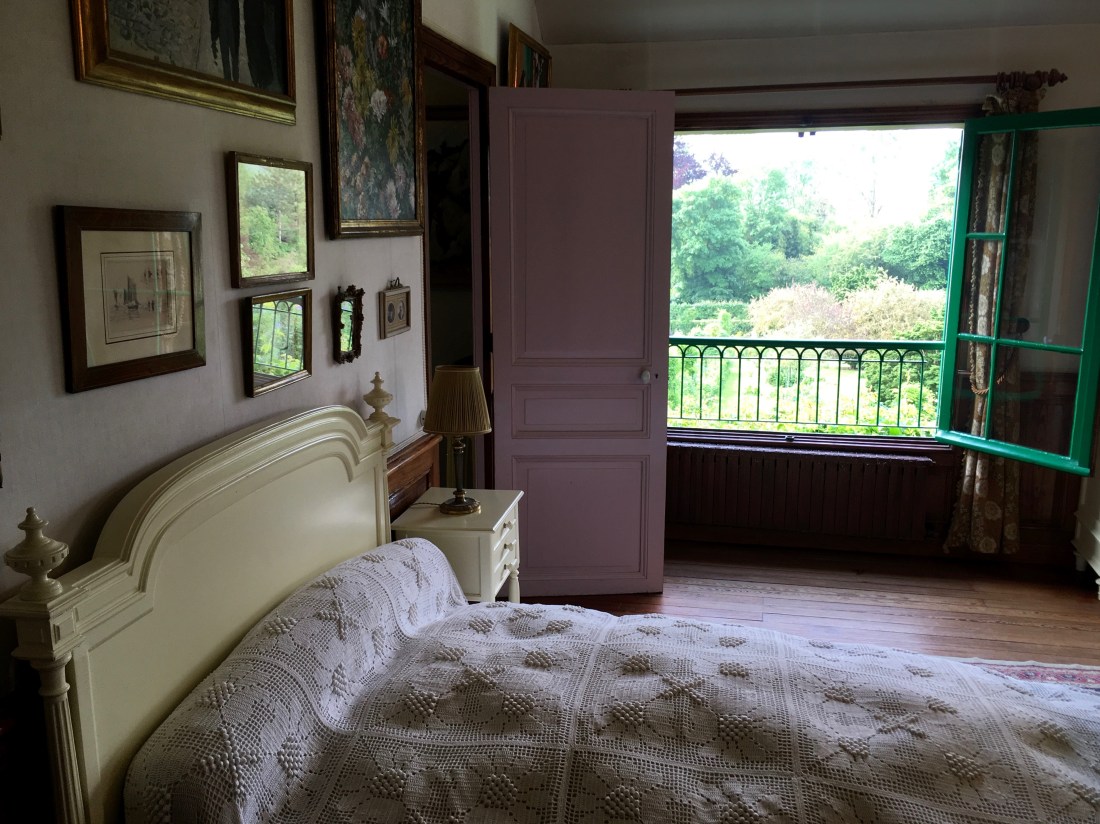
Dit is de privé-chauffeur van Monet die hem hierin van zijn woonhuis in Giverny naar het station in Vernon bracht, vanwaar hij een dik uur later in Parijs aankwam. Die tocht maakte ik vanmorgen vroeg met mijn fiets, die ik (gratis!) meenam op de trein vanaf Gare Saint Lazare. Ik wilde de eerste zijn want er was me al verteld dat ik bij een bezoek aan de tuinen op busladingen mede-geïnteresseerden kon rekenen. Ik wás de eerste en betrad het huis en de slaapkamer, waar Claude Monet net was opgestaan, de sprei recht gestreken, om te gaan schilderen aan de vijver.
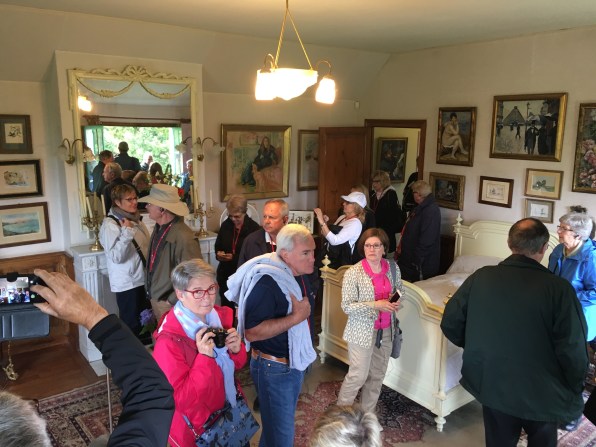
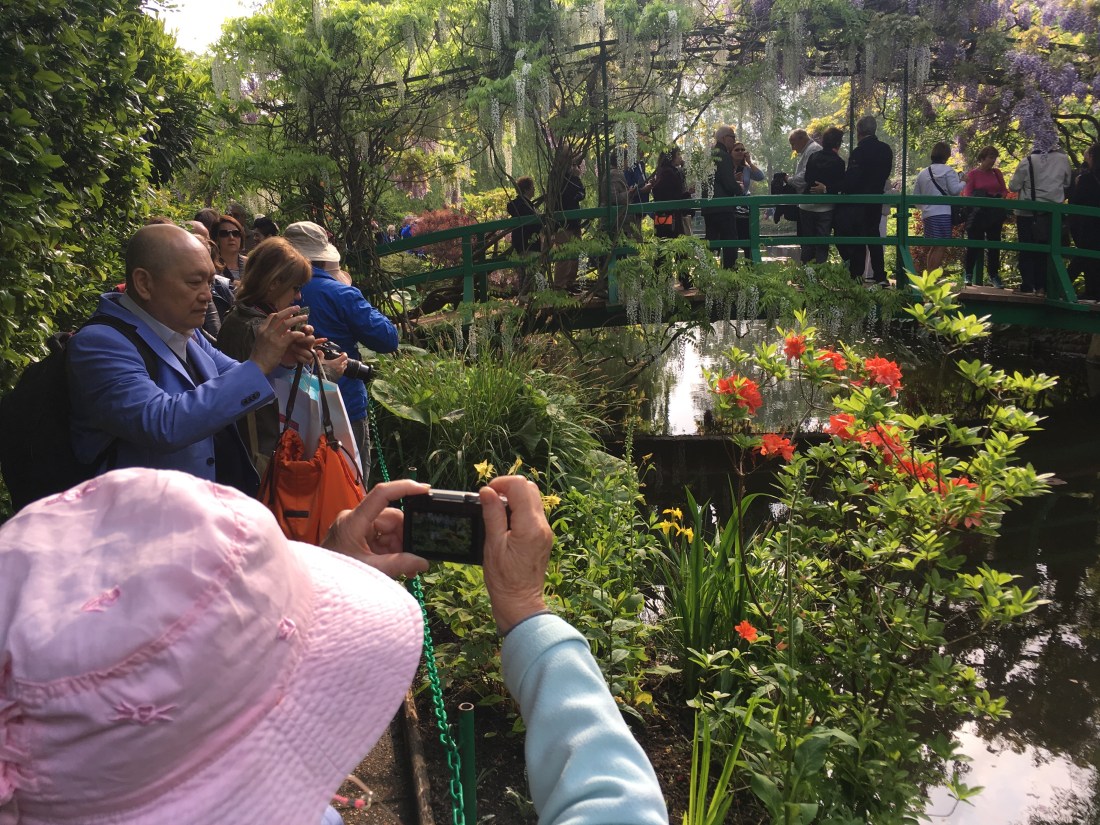
Tien minuten later was het al niet meer te doen.


This is the private chauffeur of Monet who brought him from his home in Giverny to the station in Vernon, from where he arrived in Paris a good hour later. I made this trip early this morning with my bike, which I took on  the train from Gare Saint Lazare. I wanted to be the first because I had already been told that when I visited the gardens I could count on busloads of other interested people.
I wás the first and entered the house and the bedroom, where Claude Monet had just got up, straightened the bedspread, to paint the pond.
Ten minutes later it was already too crowded.


IMG_1821.jpg


IMG_1836 2.jpg


Het begon als een pluk-tuin, met bloemen die Monet binnen wilde schilderen. Maar al snel werd zijn interesse groter in de gevolgen voor kleur van lichtval en weersgesteldheid, in de verschillende seizoenen. Hij laat een zijstroom van de Seine omleggen om op een nieuw terrein vijvers te creëren. Als buiten de Eerste Wereldoorlog woedt laat Monet er een tweede ‘bovenlicht’ atelier bouwen om zich te kunnen wijden aan de weergave van ‘de oneindige ruimte in kleur, licht en reflectie’ op honderd meter linnen. Zodra de wapenstilstand getekend is, schenkt hij er enkele aan de Franse Staat. Niet tevreden met het resultaat schildert hij verder, vernietigt er een paar en besluit pas kort voor zijn dood dat 19 lange panelen een plaats krijgen in de speciaal ontworpen, ovale ruimtes van de Orangerie. Ze worden lang niet gewaardeerd, zeker niet door de Fransen. Het museum plaatste al snel vóór de schilderijen nieuwe wanden om er andere tentoonstellingen te kunnen maken. Eigenlijk zijn het de Amerikanen die de (abstracte) kwaliteit herkennen en het werk in de jaren ’50 als voorloper beschouwen van hun eigen colourfield painters (Rothko, Clyfford Styll, Guston, Newman, Joan Mitchel en Kelly).

Het Gemeentemuseum in den Haag organiseert eind 2019 een groot overzicht over de 25 laatste jaren van zijn leven en werk in Giverny.


It started as a picking garden, with flowers that Monet wanted to paint. But soon he became more interested in the consequences for color of light and weather in the different seasons. He redirects a side stream of the Seine to create ponds in a new area. If outside the First World War rages, Monet will have a second studio  build- now with natural light – to devote himself to the rendering of ‘the infinite space in color, light and reflection’ on a hundred meters of linen. As soon as the armistice has been signed, he donates some to the French State. Not happy with the result, he paints further, destroys a few, and only shortly before his death decides that 19 long panels get a place in the specially designed oval spaces of the Orangery. They were not really appreciated, certainly not by the French. The museum quickly placed new walls before the paintings to make other exhibitions. Actually, it is the Americans who recognize the (abstract) quality and consider the work in the fifties as a forerunner of their own colourfield painters (Rothko, Clyfford Styll, Guston, Newman, Joan Mitchel and Kelly).

The Gemeentemuseum in The Hague is organizing a large overview of the last 25 years of his life and work in Giverny at the end of 2019.


IMG_1867.jpg


IMG_1889.jpg


History

frad063_5bib_00003_0009_2.jpg


Er is een museum niet ver van Brussel dat lang particulier bezit was van de koning van België, Leopold II. Daar toonde hij zijn koloniale veroveringen en alle met veel en gruwelijk geweld verkregen bezit. Leopold beschouwde de Kongo ook als privébezit en de rubberplantages een grote inkomstenbron, waarin tien miljoen Afrikanen de dood vonden. Toen we daar ooit eens met het basisjaar waren schrokken we nog van de unverfroren schaamteloze wijze waarop alles getoond werd. Leopold als weldoener. Toen bedachten we al dat de beste aanklacht zou zijn er een grote glazen stolp overheen te plaatsen; niets meer aan doen. Maar natuurlijk moest het anders. Het ‘Afrika-museum Tervuren’ is al vijf jaar dicht vanwege een omvangrijke renovatie. Dat wordt waarschijnlijk een politiek correct mea culpa.
Zoals elke andere westerse mogendheid worstelt ook Frankrijk ermee; het koloniaal verleden en hoe laat je dat zien.

There is a museum not far from Brussels that was long privately owned by the King of Belgium, Leopold II. There he showed his colonial conquests and all possessions acquired with great and gruesome violence. Leopold also considered the Congo as a private property and rubber a major source of income, in which ten million Africans died. When we once visited it with the foundation-year we were shocked by the shameless way in which everything was shown.
Leopold as a benefactor. Then we thought that the best solution would be to place a glass dome over it. But of course there were other plans. The ‘Africa Museum Tervuren’ has been closed for five years because of a major renovation.
That will probably be a politically correct mea culpa.

Like any other Western power, France also struggles with it; the colonial past and how to show it.


general1.113.jpg

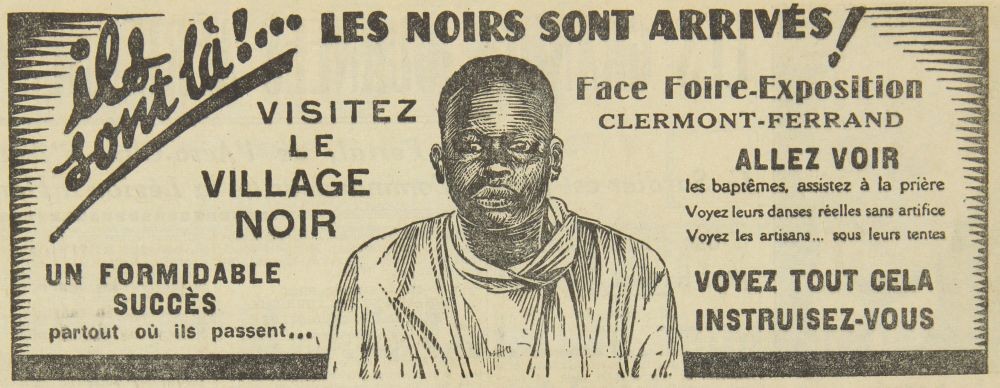
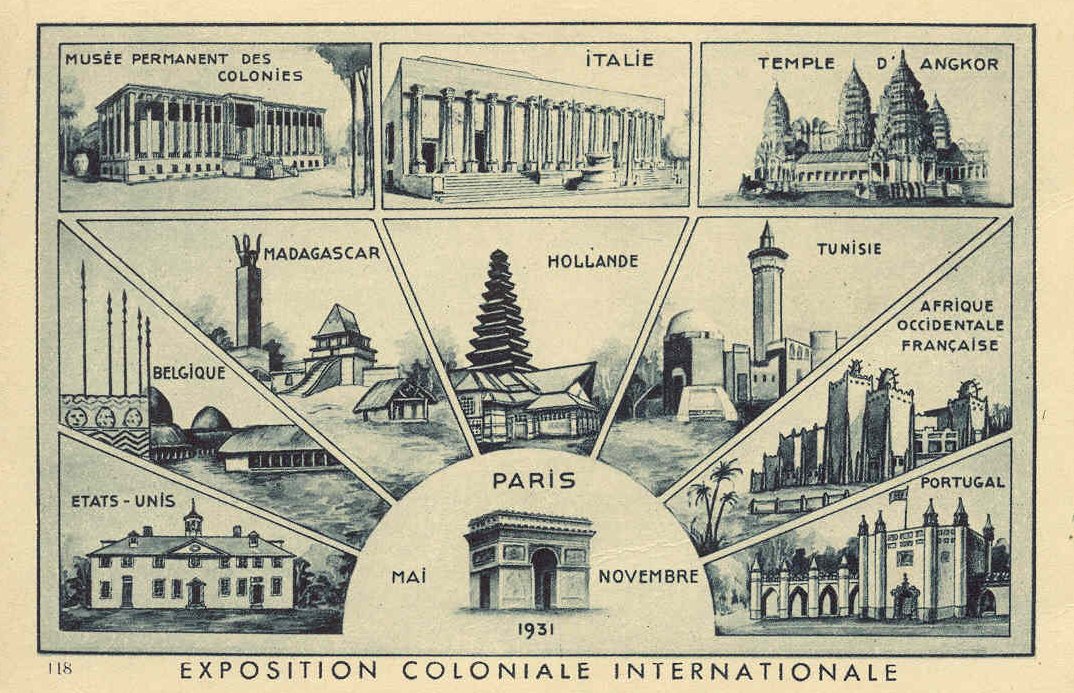
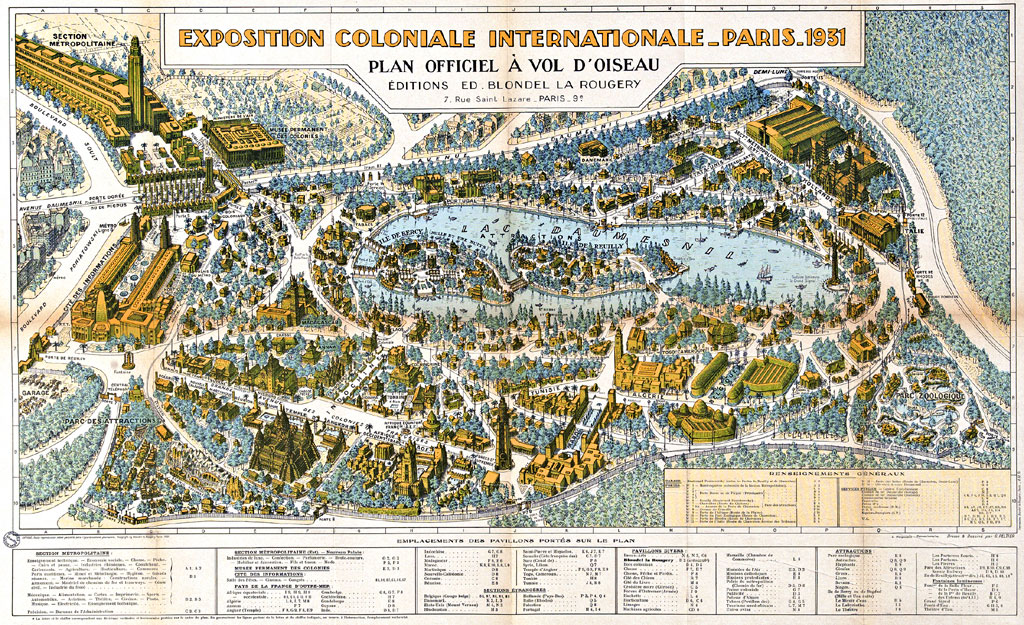
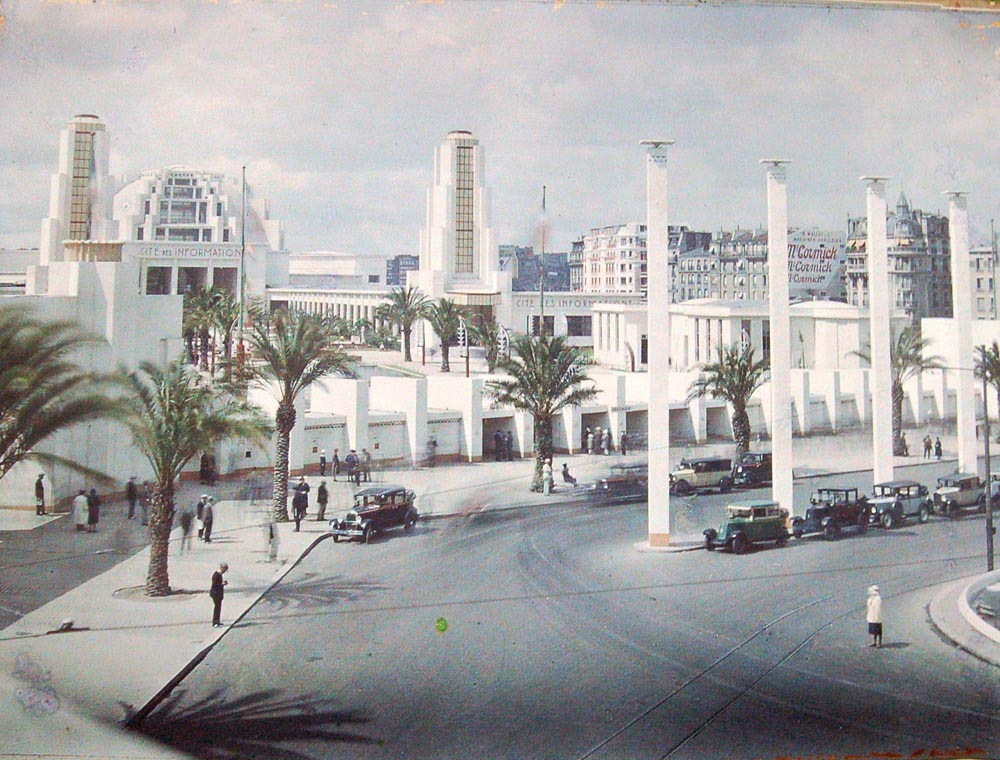
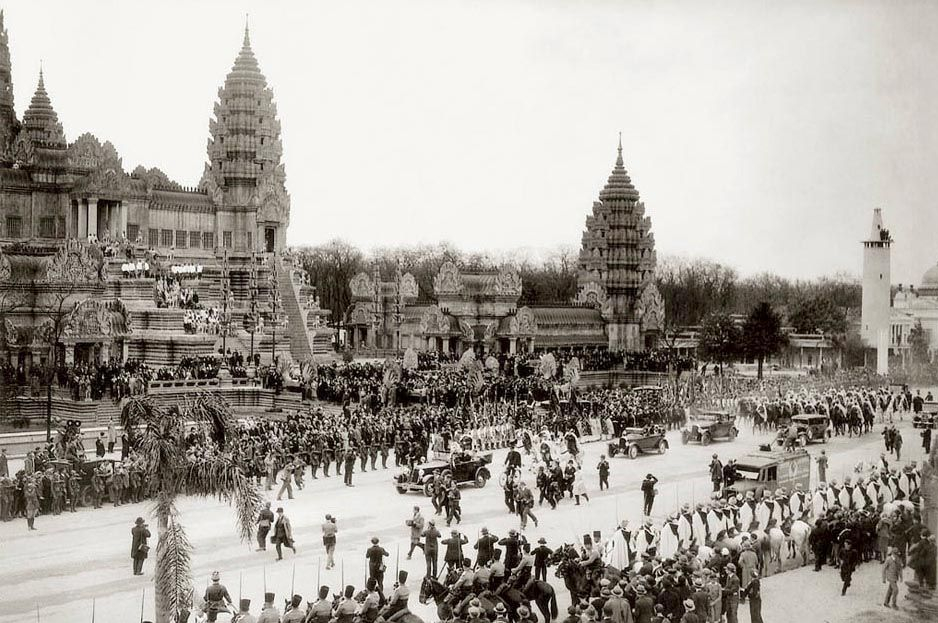
Het grote voordeel van hier wonen is dat je zomaar eens oostwaarts fietsend, in het Bois de Vincennes belandt, waar ik nooit eerder was geweest. En daar staat het opmerkelijke Palais de la Porte Dorée, waar ik zelfs nooit van gehoord had. Het verwaarloosde deel van de stad kreeg eind jaren ’20 een enorme boost toen werd besloten daar de Exposition Coloniale Internationale van 1931 te laten plaatsvinden. Het werd een groot evenement en toonde de macht van het Franse Koloniale rijk, maar ook dat van Nederland (het Nederlandse paviljoen -een kopie van een Sumatraanse tempel- ging halverwege de tentoonstelling in vlammen op * iets voor Andere Tijden!).  In een half jaar tijd kwamen er 8 miljoen bezoekers kijken naar de gebouwen, tempels, een dierentuin, rituelen, dansvoorstellingen, inheemse dorpen en hun bewoners, en naar de doopplechtigheid van heidense inboorlingen door een Franse priester.


The big advantage of living here is that you just cycle eastward, to the Bois de Vincennes, where I had never been before. And there is the remarkable Palais de la Porte Dorée, which I had never even heard of.
The neglected part of the city got a huge boost at the end of the 1920s when it was decided to have the Exposition Colonial International take place there. It must have been a huge event and showed the power of the French Colonial Empire, but also that of the Netherlands.
The Dutch pavilion (a copy of a Sumatran temple) went up in flames halfway through the exhibition. In a half-year  8 million visitors came to see buildings, temples, a zoo, rituals, dance performances, indigenous villages and their inhabitants, and the baptism of the pagan natives, by a French priest in ‘Le village noir’.


Expo-coloniale-Paris-1931.jpg9328 2.JPGa9c2b3bae131a8747ef937e3b695f752

Het moet uiterst exotisch en betoverend geweest zijn voor de bezoekers. Het paleis dat er nu nog staat was toen het hoofdgebouw en huisvestte het eerste aquarium van Parijs, dat er nog steeds is. Maar natuurlijk was toen ook al duidelijk dat er tegengeluid moest komen en dat kwam er van een groep kunstenaars onder leiding van André Breton -zelf een groot verzamelaar van etnografica, maar goed-, met een tentoonstelling die ‘ De waarheid over de koloniën’  heette; z’n tijd ver vooruit.

https://archive.org/details/filmcollectief-01-558


It must have been extremely exotic and enchanting for the visitors. The palace that still stands today was the main building and housed the first aquarium in Paris, still in operation.
But of course it was already clear then that a critical sound was unavoidable, and that came from a group of artists led by André Breton – himself a great collector of ethnography, by the way-, with an exhibition called ‘The truth about the colonies’; its time far ahead.

IMG_1600

IMG_1586

IMG_1597


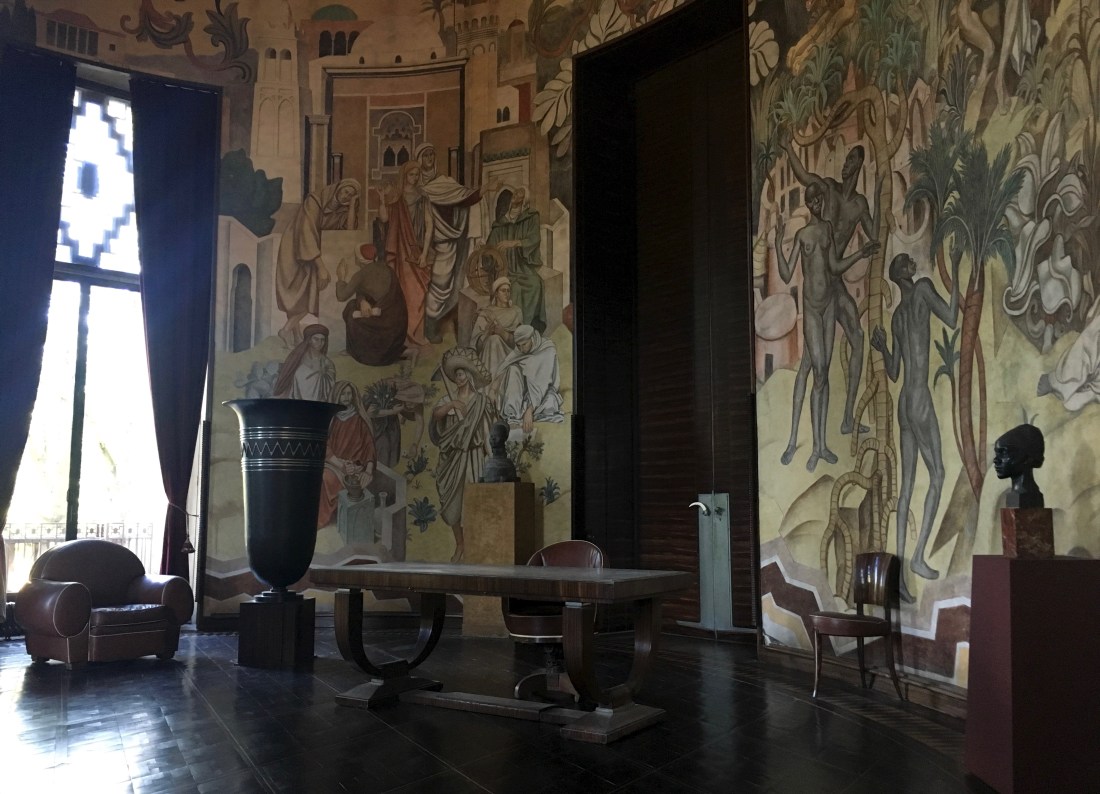
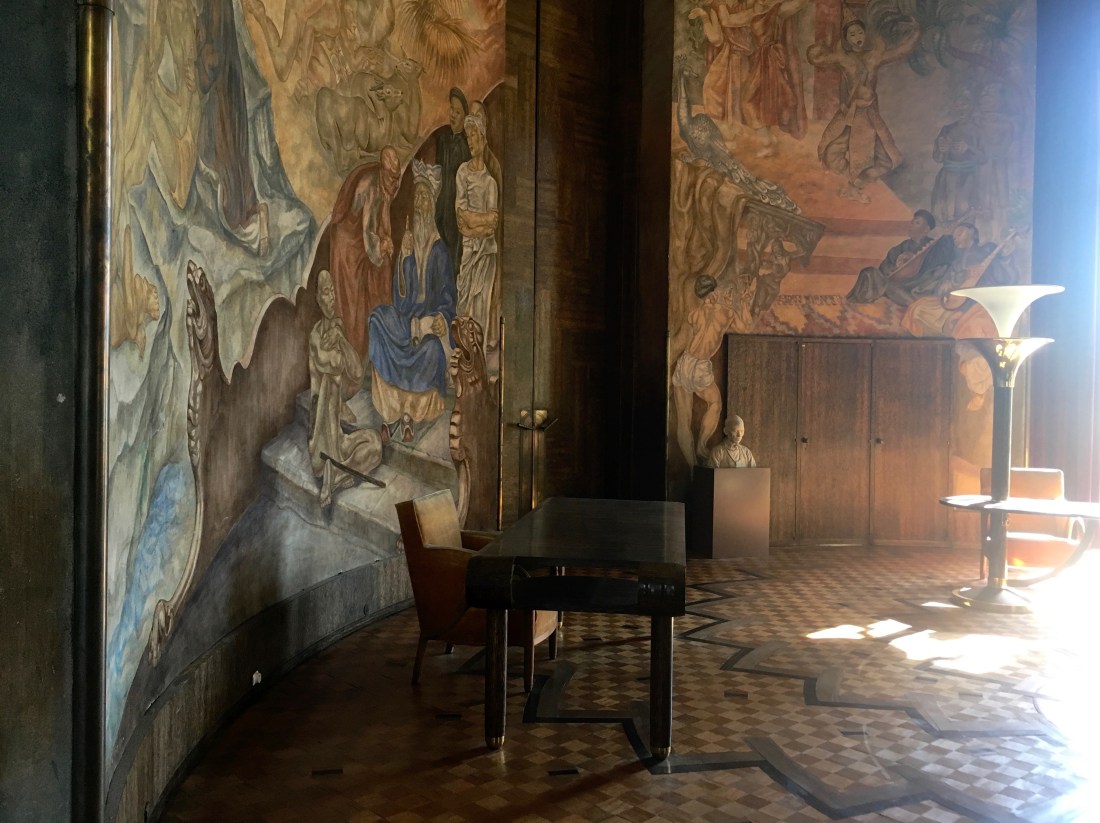
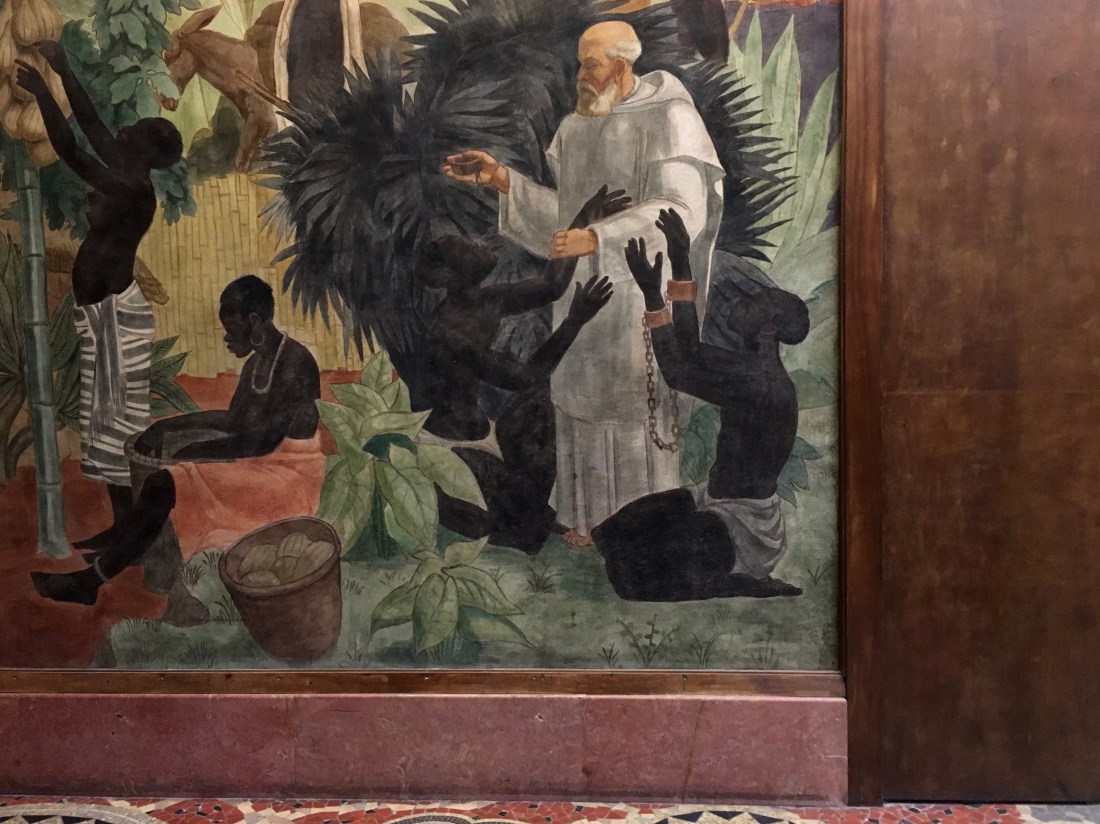
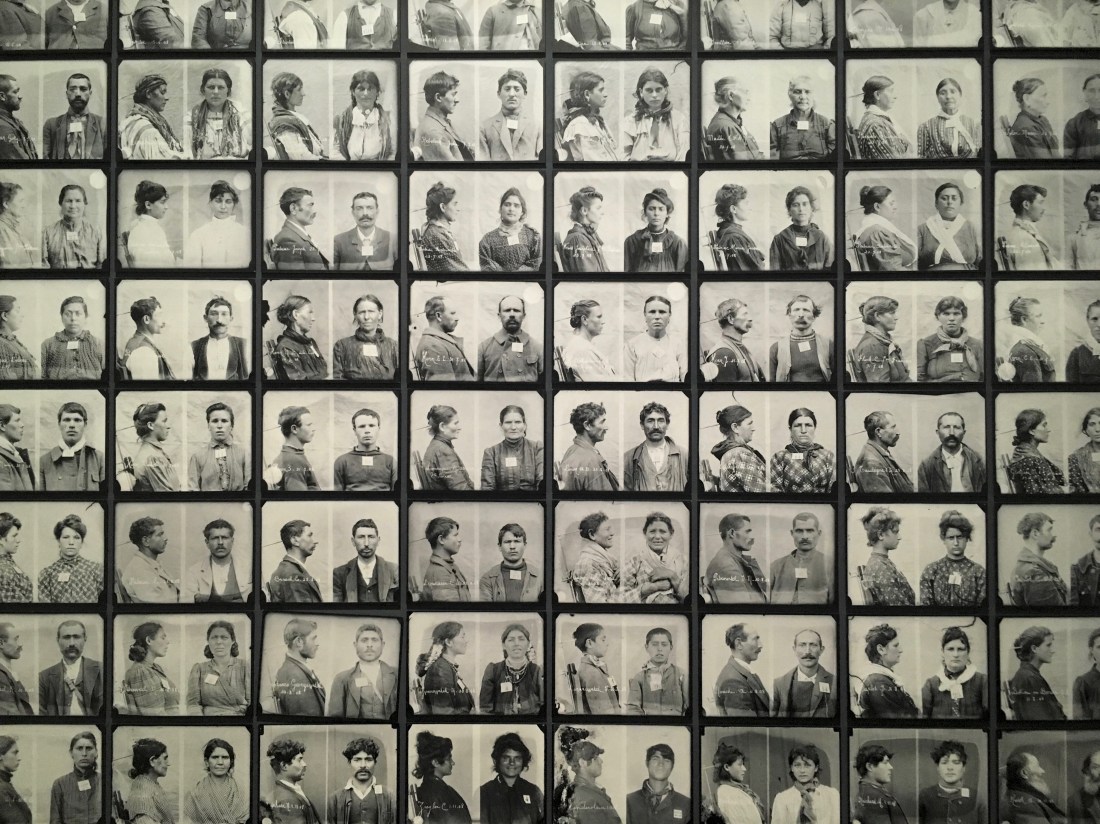
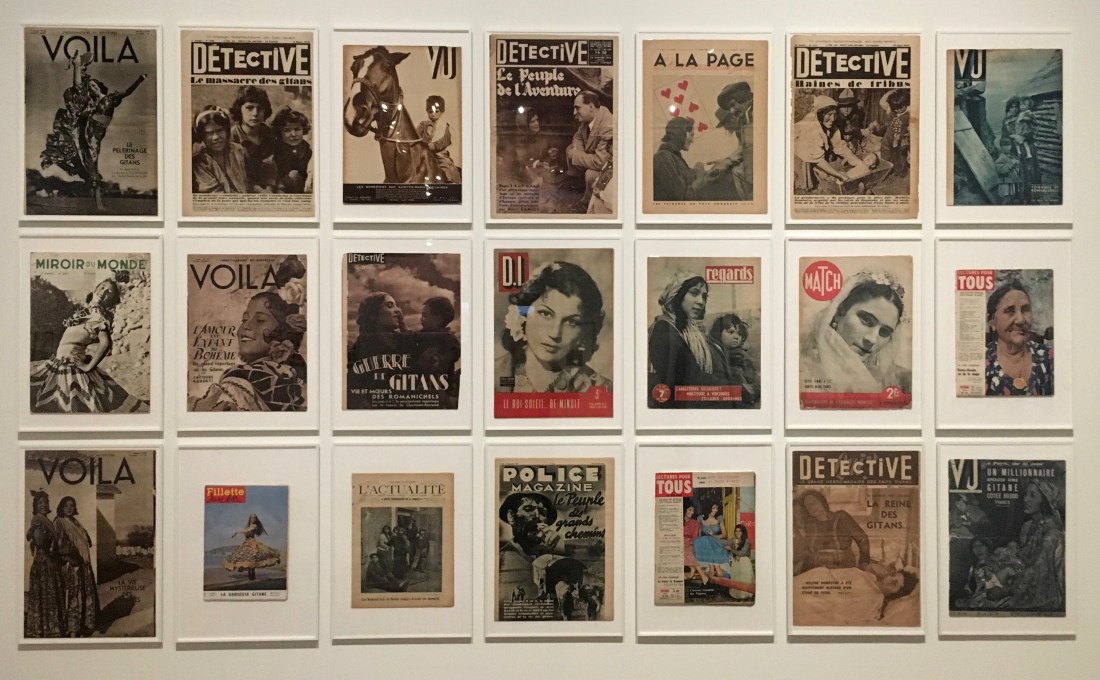
Met het paleis zat men lang in z’n maag. Als een mooi voorbeeld van Art Deco met een gebeeldhouwde gevel en bijzondere muurschilderingen te bijzonder om af te breken, maar ingehaald door de geschiedenis en door nieuwe musea als Musée Quai Branly heeft het lang leeg gestaan. Nu is alles opgeknapt en als tijdsbeeld  alleen al de moeite waard. Sinds een paar jaar is er ‘het Museum van de Geschiedenis van de Immigratie’, met een tamelijk plichtmatige expositie. Máár, als tijdelijke tentoonstelling was er Mondes Tsigane, la fabrique des Images over het beeld dat we hebben van ‘de zigeuner’ en hoe dat decennialang is gevormd en uitgebuit door de fotografie. Het wordt getoond als de constructie van een stereotype, dat aantrekkelijk is (onaangepast, wild, sensueel, ongrijpbaar) maar ook beheerst moest worden. Nooit gezien als burger van een land, altijd als outsider. De voortdurende poging greep te krijgen in nauwgezette, administratieve acties, had in de tweede wereldoorlog afschuwelijke gevolgen. Geen bevolkingsgroep was zo zorgvuldig gedocumenteerd als juist de Roma en de Sinti. En dat sloot als tentoonstelling aan op ‘la Maison Rouge’ waar nog net het werk van Ceija Stojka te zien is, en je met een kaartje van dit museum gratis toegang hebt. Echt goed gedaan.


IMG_1629


Er was door de fotograaf een speciale stoel gemaakt, met een beugel om het hoofd en profil op de juiste plaats te houden.


IMG_1637


They did not know what to do with the palace. As a fine example of Art Deco with a sculpted facade and special murals too special to demolish, but overtaken by history and by new museums like Musée Quai Branly it has been empty for a long time. Now everything has been renovated and as a time frame alone worth it. Since a few years there is ‘the Museum of the History of Immigration’, with a rather dull exhibition.
But, as a temporary exhibition, there was the Mondes Tsigane, la fabrique des Images about the image we have of ‘the gypsy’ and how it has been formed and exploited for decades by photography. It is shown as the construction of a stereotype that is attractive (unadapted, wild, sensual, elusive) but also needs to be controlled. Never seen as a citizen of a country, always as an outsider.
The constant attempt to get hold in painstaking administrative actions had terrible consequences in World War II. No population group was as carefully documented as the Roma and Sinti. And that connected to the exhibition in ‘la Maison Rouge’ where the work of Ceija Stojka still can be seen, and  free access with a ticket from this museum. Really well done


Mask


larger.jpg

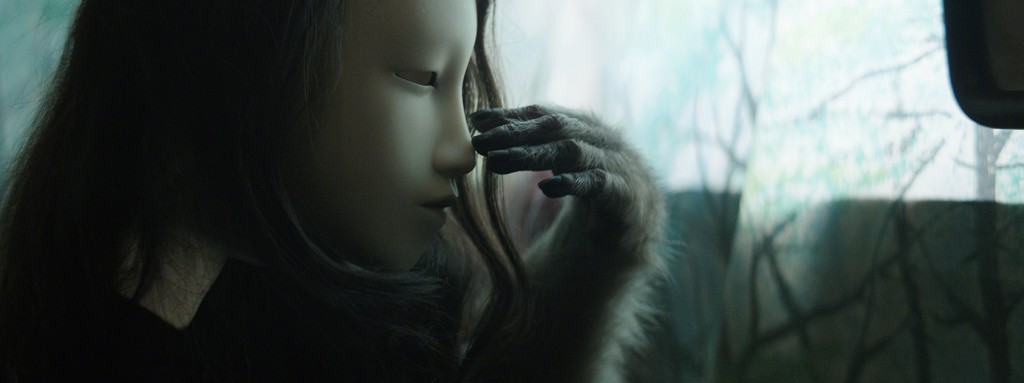
Een makaak-aap, van wie de genen het meest op die van de mens lijken, speelt de hoofdrol in een film van 20 minuten van Pierre Huyghe uit 2014; Untitled (Human Mask). Sterk onderbelichte scenes, waarin je kijkt naar wat aanvankelijk een meisje lijkt, met een schooluniform en een masker. De aap heeft lang haar en een Noh-theater masker voor haar gezicht.  Het meisje/de aap dwaalt rusteloos door de ruimtes, een vieze keuken, een verlaten, vervuild Japans restaurant, ongeduldig wachtend op klanten die niet komen. Het meest onheilspellend en vertederend is wanneer de aap een beetje aan haar lange zwarte haar plukt, of wat trommelt met haar vingers op het tafelblad. Er is geen plot. Dan zijn er ineens beelden van een lange straat waarvan alle huizen in puin liggen; het is wat overbleef na de nucleaire catastrofe in het Fukushima gebied. Het is allemaal gebaseerd op twee echte makaken die als ober in dienst zijn in een restaurant ten noorden van Tokyo. Een van de twee heeft Huyghe de hoofdrol laten spelen in deze film. Apocalyptisch, doodeng en ontroerend tegelijk.

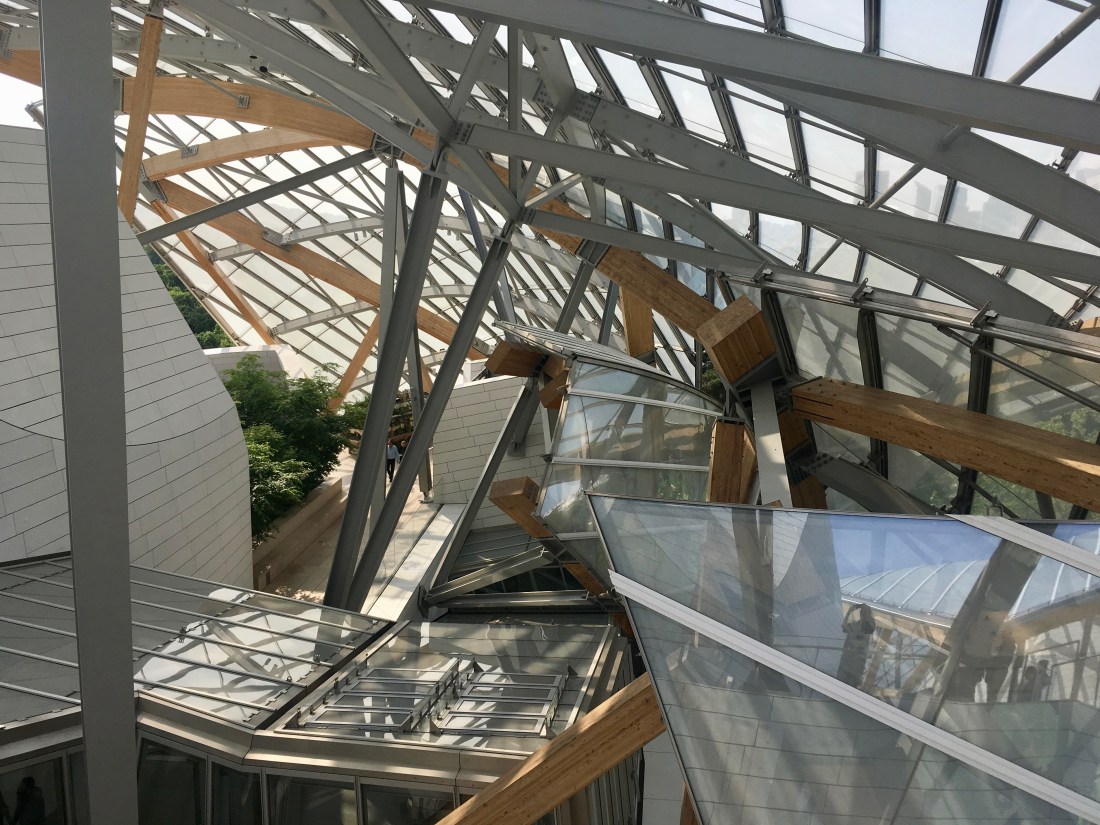
Het was net op tijd, want opnieuw vond ik het moeilijk genieten van moderne kunst, in de prestigieuze Fondation Vuitton, waarvoor Frank (Bilbao) Gehry het gebouw ontwierp. Een fantastische bijna auto-loze tocht (je kunt langs de Seine een heel eind auto-vrij fietsen) naar het Bois de Boulogne, aan het eind van de middag. Het slagschip dat je van verre ziet liggen, zit onnodig gecompliceerd in elkaar, -groot machtsvertoon-, heeft veel overbodige non-ruimte en te grote museumzalen waar te weinig hing en stond. Een tentoonstelling uit eigen collectie, waar met moeite thema’s gevonden waren om er wat cohesie in te brengen. Grote namen maar teveel loze werken. Wat is het toch gek, dat je op een gebouw verliefd kunt worden (Villa Savoye) of totaal onaangedaan, zelfs geïrriteerd, zo snel mogelijk het bos weer in wilt.


IMG_1665.jpg

En in de zalen met werk van Murakami werd op de vloer een plek aangewezen waar je je selfie maken kunt, en ik geloof dat het niet eens ironisch bedoeld was:

IMG_1668.jpg


A macaque monkey, whose genes most closely resemble humans, plays the lead role in a 20-minute film by Pierre Huyghe from 2014; Untitled (Human Mask). Highly underexposed scenes, in which you look at what initially seems a girl, with a school uniform and a mask. The monkey has long hair and a Noh-theater mask for her face. The girl / monkey wanders restlessly through the rooms, a dirty kitchen, an abandoned, polluted Japanese restaurant, impatiently waiting for customers who are not coming. The most ominous and endearing thing is when the monkey picks a bit of her long black hair, or drums with her fingers on the tabletop. There is no plot. Then there are suddenly images of a long street with all the houses in ruins; it is what remained after the nuclear catastrophe in the Fukushima area. It is all based on two real macaques who serve as a waiter in a restaurant north of Tokyo. One of the two Huyghe hired to play the leading role in this film. Apocalyptic, scary and moving at the same time.

It was just in time, because again I found it difficult to enjoy modern art, in the prestigious Fondation Vuitton, for which Frank (Bilbao) Gehry designed the building. A fantastic almost car-free trip (you can cycle a long way along the Seine without cars) to the Bois de Boulogne, at the end of the afternoon. The battleship that you see from afar, is unnecessarily complicated, -such a power show-, has a lot of superfluous non-space and too large museum rooms where there was too little hanging and standing. An exhibition from their own collection, where themes were found with difficulty to bring in some cohesion. Big names but empty works. How strange it is, that you can fall in love with a building (Villa Savoye) or totally unaffected, even annoyed, as soon as possible back in the forest again.

Not the end

nissim
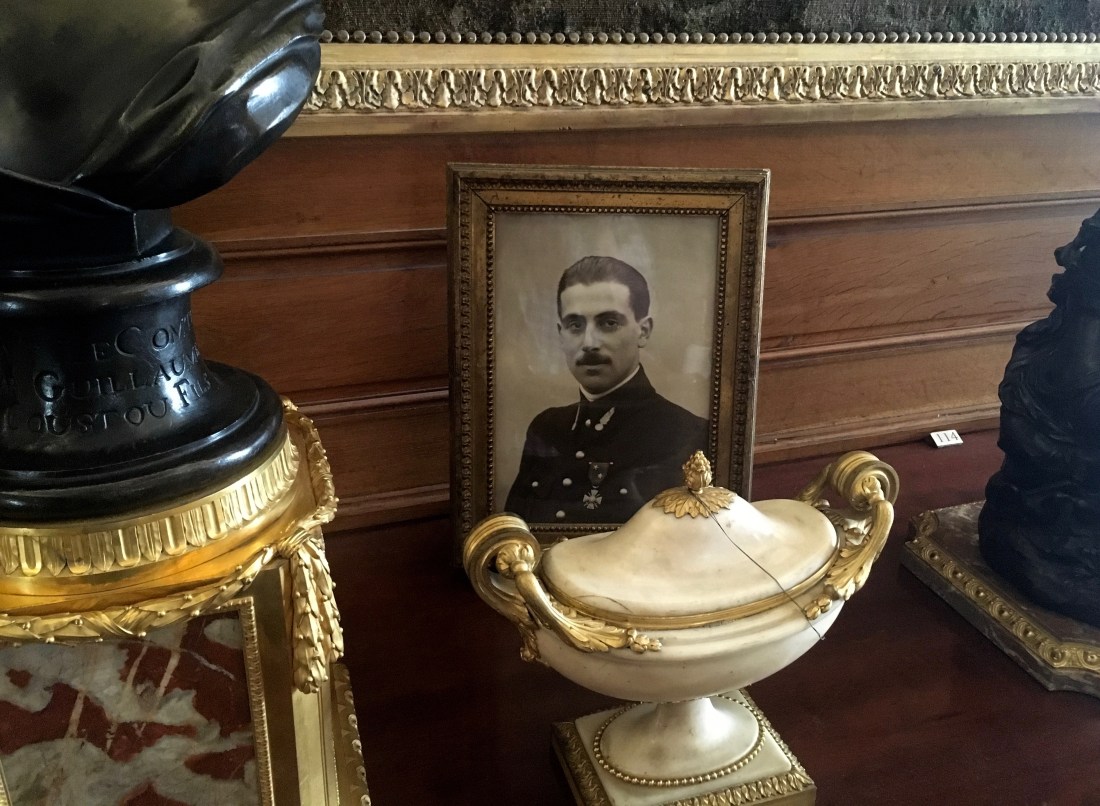
Nissim de Camondo, 23 jaar.

Niet het einde

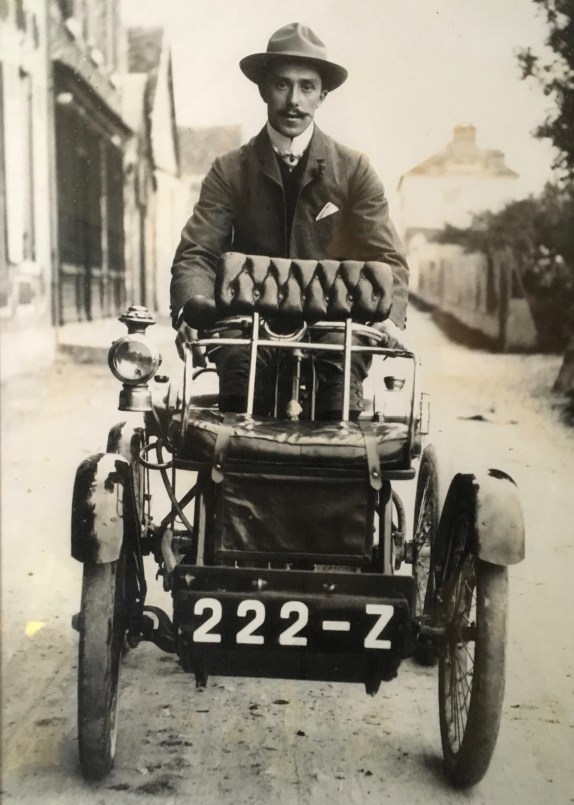
The Rothschilds of the Orient, zo werd de familie de Camondo genoemd. Hun bank werd de grootste in het Ottomaanse rijk en de familie opende hun eerste Europese vestiging in Parijs. Twee broers uit de volgende generatie,  kochten een dubbel perceel aan Parc Monceau en bouwden er huizen. Hun zoons, de neven Isaac en Moïse, bleven er wonen. Isaac verzamelde vooral impressionisten ( nu allemaal in d’Orsay), en Moïse liet het huis van zijn vader afbreken om er naar nieuw ontwerp een mansion te bouwen om zijn verzameling meubilair en schilderijen uit  de 18e eeuw onder te kunnen brengen. Zijn vrouw verkoos verder te leven met een Italiaanse graaf en Moïse bleef met zijn twee kinderen Nissim en Béatrice achter in het grote huis aan Parc Monceau. Alle hoop op voortzetting van het bedrijf, en uitbreiding van de collectie was gevestigd op zijn zoon, Nissim. Het werd oorlog,  Nissim werd opgeroepen, maakte deel uit van de French Air Force en werd in 1917 uit de lucht geschoten.

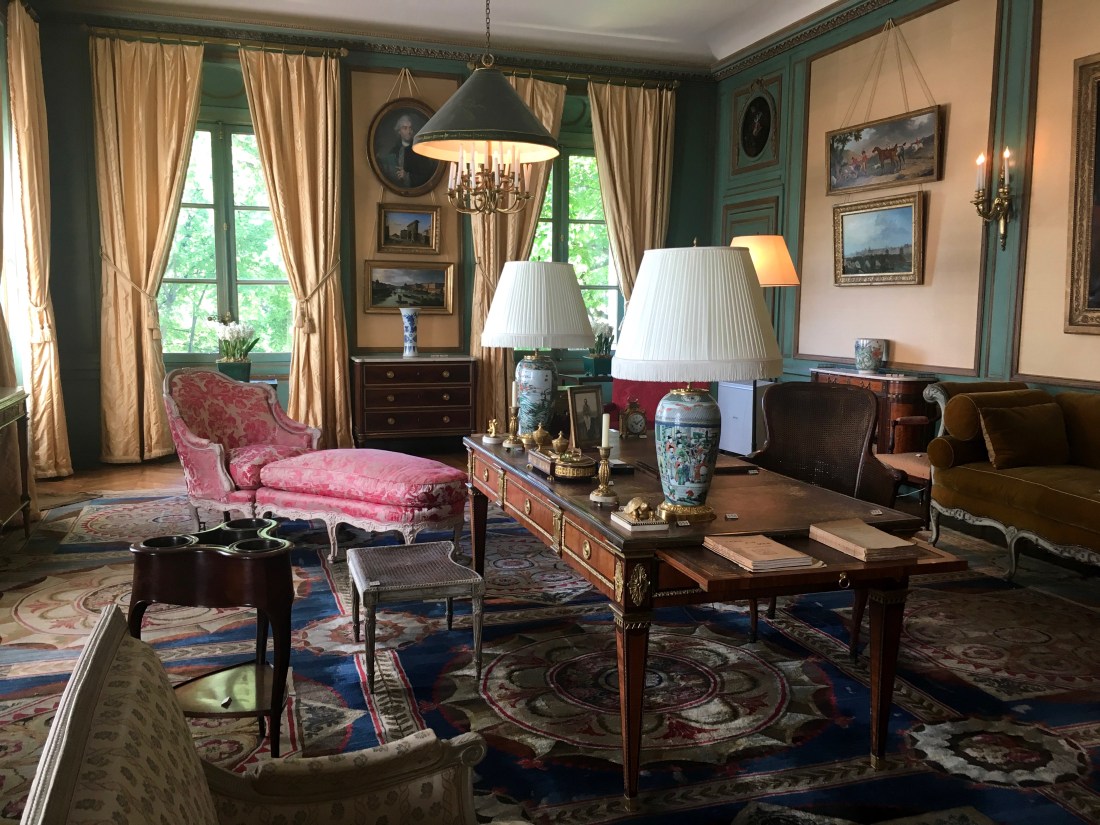
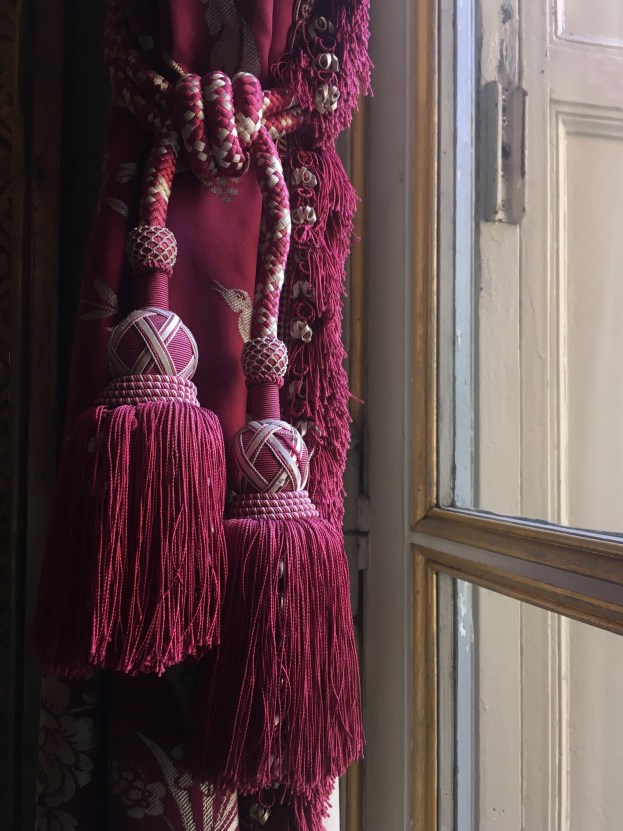
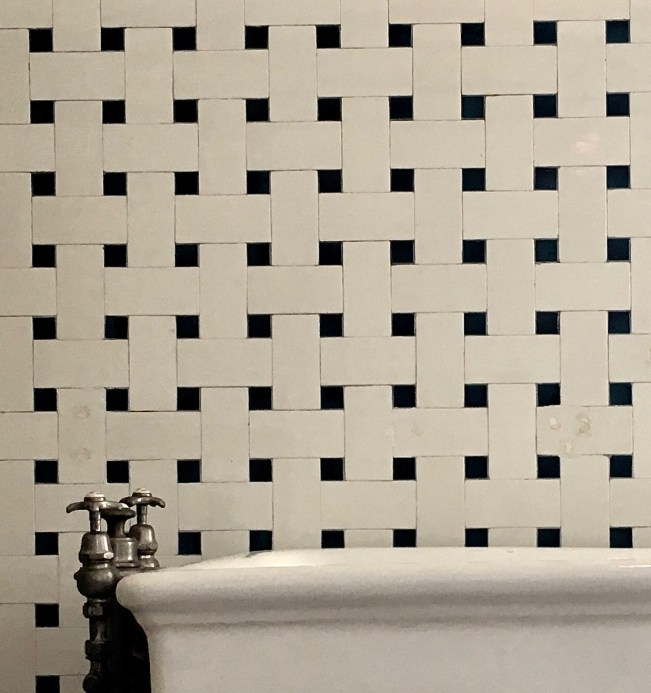
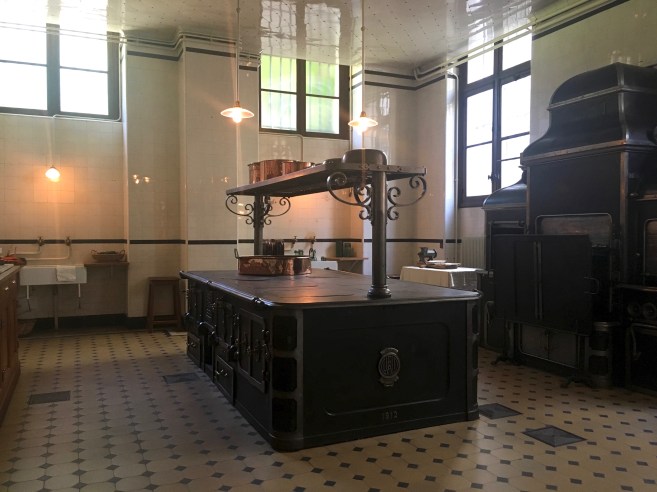
Moise overlijdt in 1935 en besloot zijn hele bezit na te laten aan de Franse staat, met het verzoek niets te veranderen aan de collectie en de inrichting. Dus nu stap je op een zonnige zondagmiddag in de met grote liefde bijeengebrachte verzameling in een weldadig huis. In alles het tegenovergestelde van le Corbusier en toch, ook hier zou je willen wonen. Dit keer vooral omdat ik de tijd nam en inzoomde op de details van al dat ongelooflijk houtsnijwerk, Japanse lakpanelen, intarsia in houtfineer, smeedijzer, koperbeslag, porselein, ivoren kastdeurknopjes, geweven wandbespanning, marmer en bladgoud. Een oven uit 1902 waaraan een kalf aan het spit gebraden kon worden met een elektrisch aangedreven roteersysteem, een eettafel voor 28 personen, servies voor honderd, comfortabele badkamers. Maar opvallend voelbaar, hangt het verdriet nog steeds in het huis. Moïse, voor wie de dood van zijn zoon in alles het einde betekende, trok zich terug en vervolmaakte zijn woning, maar zonder vreugde. En dat ervaar je daar, hoe prachtig ook.

Béatrice en haar kinderen werden -een oorlog verder- vermoord in Auschwitz, waarmee de familielijn definitief ophield te bestaan.


The Rothschilds of the Orient, the Camondo family was called. Their bank became the largest in the Ottoman Empire and the family opened their first European branch in Paris. Two brothers from the next generation, bought a double plot at Parc Monceau and built houses there. Their sons, the nephews Isaac and Moïse, continued to live there. Isaac mainly collected Impressionists (now all in d’Orsay), and Moïse had his father’s house demolished to build a new mansion in order to accommodate his collection of furniture and paintings from the 18th century. His wife chose to live with an Italian count and Moïse stayed with his two children Nissim and Béatrice in the big house at Parc Monceau. All hope for continuation of the company, and expansion of the collection was based on his son, Nissim. In the First World War, Nissim was part of the French Air Force and was shot from the air in 1917.

Moise died in 1935 and decided to leave his entire property to the French state, with the request not to change the collection and the interior. So now you step on a sunny Sunday afternoon in a luxurious home, in a collection of 18th century furniture and paintings. In everything the opposite of le Corbusier and yet, here too you would want to live. I took the time and zoomed in on the details of all that incredible wood carving, Japanese lacquer panels, intarsia in wood veneer, wrought iron, copper fittings, porcelain, ivory cupboard doorknobs, woven wall coverings, marble and gold leaf. An oven from 1902 in which a calf could be roasted on the spit with an electrically powered rotate system, a dining table for 28 people, dishes for one hundred, comfortable bathrooms. But still noticeable, the grief still hangs in the house. Moïse, for whom the death of his son meant the end in everything, withdrew and perfected his home, but without joy. And you experience that, no matter how beautiful.
Béatrice and her children were murdered in Auschwitz in the next war, with which the family line ceased to exist.


nissim 2

n6

IMG_1511.jpg


IMG_1526.jpg


n 5